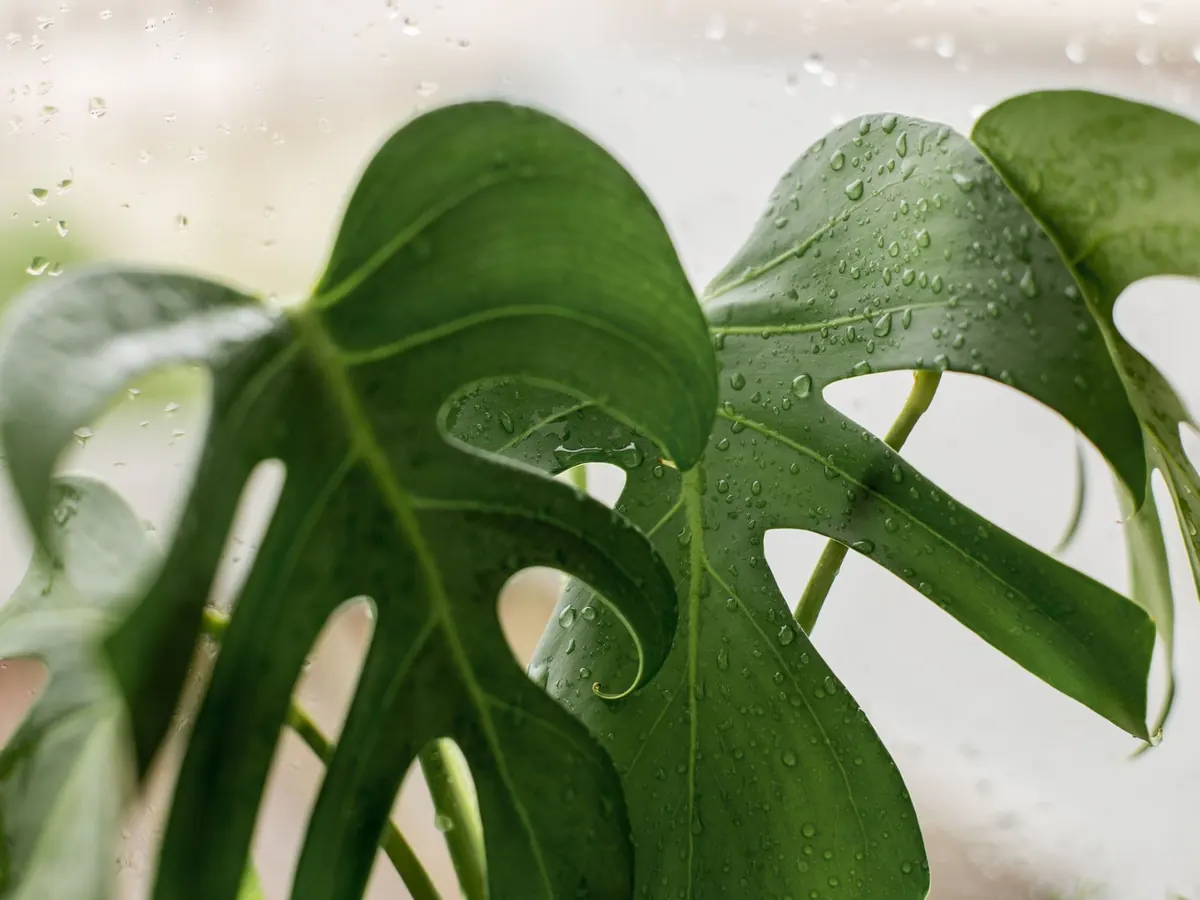
Water and weather are not just subjects for poems. They are conditions that change how a poem moves. A river is a sentence with its own grammar. Rain is a rhythm section. Fog edits the world down to what you can almost see. The prompts below are meant to get you writing quickly, before your inner critic starts checking the forecast. Try one in a single sitting. Set a timer for fifteen minutes. Read your draft out loud once. Then decide what to keep. The examples are not models to copy. They are doorways.
Start with Water’s Smallest Unit
Big water invites big language. Resist that. Begin small.
1. One drop, one surface
Write a poem that begins with a single drop of water landing on a specific surface: a car roof, a leaf, a knuckle, a windowsill. Stay with that drop for at least five lines. Let it hold light, gather dust, tremble, fall. Then let the poem widen to whatever the drop reminds the speaker of — but only after the drop has been seen clearly.
The drop holds the porch light
like a coin in a fist.
It does not know it is falling.
Notice the example avoids “beautiful” and “glistening.” Use nouns you can touch. Verbs that do one job.
2. Water in a closed system
Write in the voice of water trapped in a glass, a kettle, a puddle, or a swimming pool in winter. What does it remember? What does it want? Let it be petty or patient. A puddle might resent the sun. A kettle might sing on purpose. Keep the poem under twelve lines. No abstractions like “freedom” or “eternity” — only what this water can sense from where it sits.
I have been the shape of every cup.
I still forget the ocean.
Follow a River, Literally or Figuratively
3. Source to mouth
Trace a river from its source to where it meets a larger body. You can do this in one long sentence, or in short numbered sections. Include at least one human artifact along the way: a boot, a bridge, a bottle cap, a fishing line. The artifact should appear without commentary. Let it sit in the current. The poem does not need to explain what it means.
At the source, snowmelt stitches the rock.
By the bridge, a soda can keeps time.
At the mouth, the river forgets its name
and is not sad about it.
4. The river as a clock
Write a poem where the river marks time. Each stanza is a different hour, season, or year. Let the water change speed: a trickle in one stanza, a flood in the next, a slow green pause after that. This prompt teaches structure without forcing a rigid form. You can also use the river’s changing sound — a whisper, a clatter, a hum — to signal each turn.
Six a.m.: the river is a thin wire.
Noon: it carries the bridge’s shadow like a debt.
Midnight: it keeps moving, which is its only job.
Make Rain a Rhythm
5. Line breaks as rainfall
Write a poem about rain where the line lengths imitate the weather. Start with long, rolling lines. Let them shorten as the rain picks up. End with a few one- or two-word lines, then a single line that lands hard. You can also repeat a small word — “again,” “still,” “down” — but only two or three times. Repetition should feel like a drip, not a chant.
The gutter gargles, the downspout drums,
the roof
holds
its breath.
6. A rain poem without the word rain
Write about rain without using the word. Rely on sound, texture, smell, and consequence. Wet wool. Slick steps. The smell of pavement after a hot day. A dog shaking off in the hallway. The way conversation pauses when the first drops hit the window. This constraint forces you to notice what rain does rather than what it is called. Aim for ten to fifteen lines.
Let Weather Become a Character
7. Give a weather event a body
Choose fog, wind, heat, or snow. Give it hands, a pulse, a bad mood, a habit. Write a short dialogue between two weathers. Let them argue, flirt, or ignore each other. Keep the lines plain. The strangeness should come from the situation, not from fancy adjectives.
Fog said, You are too loud.
Wind said, You are too slow.
They agreed to meet at the coast
and ruin a wedding.
8. The forecast that got it wrong
Write in the voice of a forecast that predicted sun and got hail, or predicted snow and got a warm drizzle. Let it apologize, make excuses, or double down. This gives you a speaker with a personality and a problem. Keep it under fourteen lines. The poem can be funny or uneasy. Either way, let the weather speak for itself.
Use Sky and Light as a Turning Point
9. A change in light
Write a poem that turns on a change in light. Begin in one kind of light — blue morning, flat noon, amber evening — and end in another. Do not use weather words in the first half. Let the turn happen in a single line. The change can be literal or emotional. The point is to let light do the work of transition instead of a paragraph of explanation.
Morning was a blue bowl.
By noon, the bowl had cracked
and spilled.
10. A sky that does not match
Write about a sky that is wrong for the feeling on the ground. A bright, cheerful sky at a funeral. A storm during a picnic. A soft rain on a day that should be angry. Avoid irony. Instead, let the mismatch create pressure. Describe the sky accurately. Describe the human scene accurately. Do not tell the reader what to feel. Let the two pictures sit side by side until they start to argue.
A Practice for Staying Loose
These prompts work best when you treat them as starts, not assignments. A draft that goes nowhere still teaches your hand what water feels like on the page. Keep a weather journal for a week. Write three sentences each day about what the sky is doing and how it changes your body. Then use one of those sentences as the first line of a poem.
Here is a simple routine to keep the prompts useful:
- Set a timer for fifteen minutes and write without stopping.
- Use concrete nouns: gutter, hail, ferry, puddle, windshield, tide.
- Cut any line that explains what the poem already shows.
- Read the draft out loud to hear where the rhythm drags.
- Come back the next day and keep only the lines that surprise you.
Water and weather will keep giving you material. A storm is never the same storm twice. Neither is a river, even when it runs through the same banks. Write the version in front of you. Then write another.
Photo: Caroline Veronez / Pexels